Are Peanuts Healthy? 7 Health Benefits and Things You Should Know
Peanuts are one of those snacks that Singaporeans know and love! Whether you're enjoying a packet of roasted peanuts, spreading peanut butter on your morning toast or digging into a plate of satay with peanut sauce, they're everywhere.
But have you ever wondered: Are peanuts actually healthy? Can they help lower cholesterol? And is eating peanuts every day good for you?
With growing interest in how everyday foods affect our health, peanuts are getting more attention for their nutritional benefits and potential role in heart health and blood sugar management.
Before you reach for another handful, let's explore 7 important things you should know about peanuts, including their nutritional benefits, possible health risks and how much you should eat.
1. Peanuts Are Packed With Nutrients
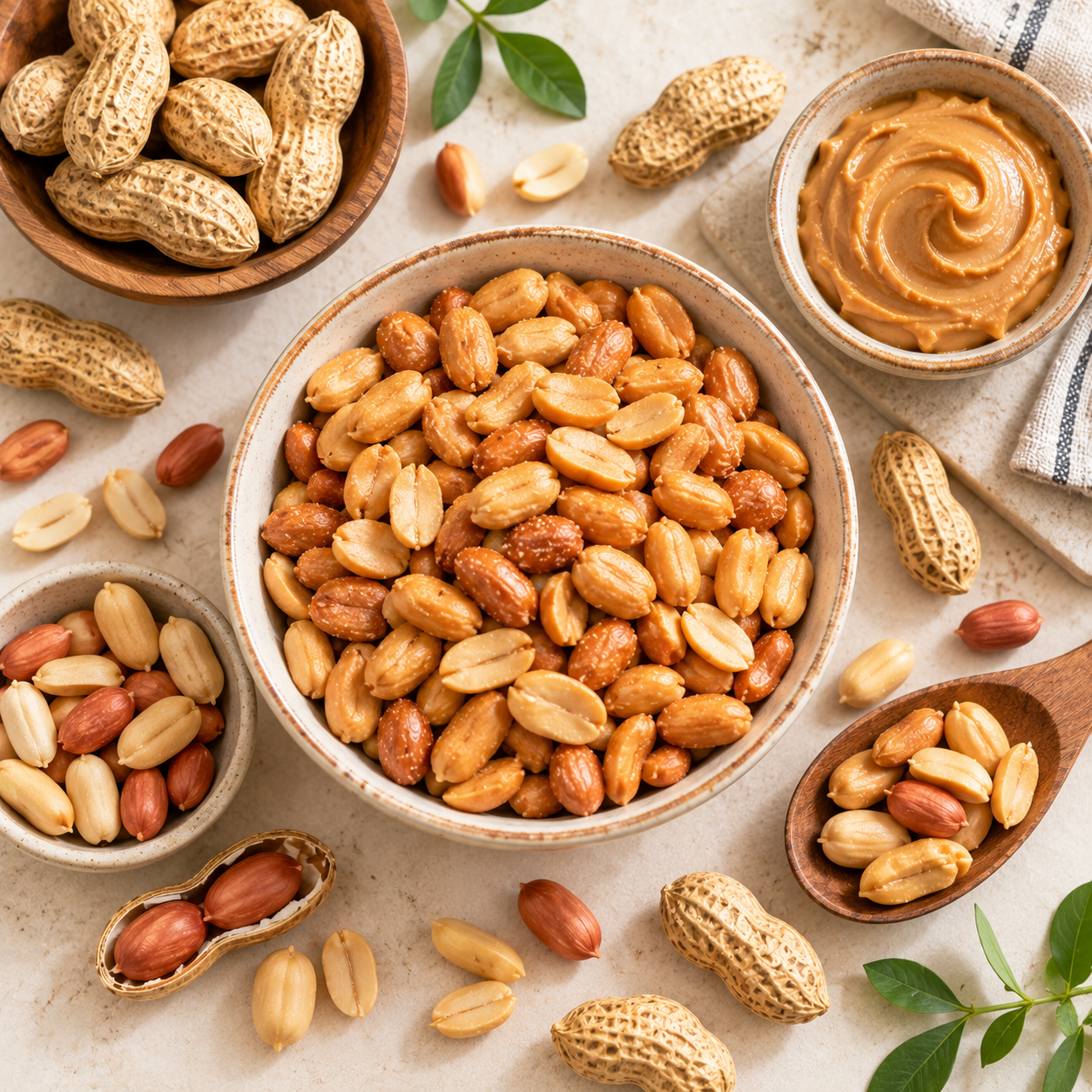
Despite their name, peanuts aren't technically nuts! They're legumes, belonging to the same plant family as beans and lentils.
However, their nutritional profile is similar to many tree nuts, making them a popular source of plant-based protein and healthy fats.
Peanuts contain several important nutrients, including:
-
Protein: Helps support muscle growth, repair and maintenance.
-
Healthy fats: Mainly monounsaturated and polyunsaturated fats.
-
Fibre: Supports digestive health and helps you feel satisfied.
-
Vitamin E: An antioxidant that helps protect cells from damage.
-
Magnesium: Supports normal muscle and nerve function.
-
Niacin (Vitamin B3): Helps the body release energy from food.
How Nutritious Are Peanuts?
Here's an approximate nutritional breakdown for 30g of plain dry-roasted peanuts without added salt.
| Nutrient | Approximate Amount |
|---|---|
| Calories | 175 kcal |
| Protein | 7.3g |
| Total fat | 15g |
| Carbohydrates | 6.4g |
| Fibre | 2.5g |
Values are approximate and may vary depending on the peanut variety and preparation method.
Good to know: Although peanuts are nutritious, they're also calorie-dense. Enjoying them in moderate portions is a practical way to include them in a balanced diet.
2. Peanuts May Support Heart Health and Cholesterol Management

Here's something interesting: despite being relatively high in fat, peanuts can be part of a heart-healthy diet.
That's because much of the fat in peanuts is unsaturated fat, which is generally considered a healthier alternative to saturated fat.
Can Peanuts Help Lower Cholesterol?
Research suggests that replacing foods high in saturated fat with foods containing unsaturated fats can help improve cholesterol levels.
For example, swapping certain processed snacks for a moderate portion of unsalted peanuts may be a healthier choice.
Peanuts also contain no dietary cholesterol because they're plant-based.
However, this doesn't mean that eating peanuts automatically lowers your cholesterol.
Your overall diet, physical activity and other lifestyle factors still play important roles.
Tip: Choose plain, unsalted peanuts more often than heavily salted or sugar-coated varieties.
3. Peanuts May Be a Good Snack for Blood Sugar Management

If you're wondering whether peanuts are suitable for people with diabetes, the answer depends on the individual and their overall diet.
Plain peanuts contain relatively little carbohydrate compared with many common snack foods.
They also provide protein, fibre and fat, which can help make them a satisfying snack.
Can Eating Peanuts Prevent Type 2 Diabetes?
Some research has explored whether eating peanuts and other nuts is associated with a lower risk of Type 2 diabetes.
However, findings from observational studies don't necessarily prove that peanuts directly prevent diabetes.
Factors such as body weight, overall diet, physical activity and family history also influence diabetes risk.
For people managing diabetes, plain peanuts may fit into a balanced eating plan, but portion sizes still matter.
Tip: Choose plain peanuts instead of sugar-coated peanuts when you're looking for a snack with less added sugar.
Remember that peanuts aren't a substitute for diabetes medication or professional dietary advice.
4. Peanuts Can Help You Feel Fuller for Longer

Ever noticed how a small handful of peanuts can feel more satisfying than some other snacks?
That's partly because peanuts contain a combination of protein, fibre and fat.
These nutrients can help promote feelings of fullness, making peanuts a convenient snack between meals.
Are Peanuts Good for Weight Management?
They can be included in a weight-management eating plan, but portion sizes matter.
Peanuts contain a relatively high number of calories in a small serving.
Replacing less nutritious snacks with a measured portion of peanuts may be a sensible choice.
However, eating large quantities on top of your usual meals can increase your total calorie intake.
Tip: Portion your peanuts into a small bowl instead of eating directly from a large packet. It's an easy way to keep track of how much you're eating.
5. How Many Peanuts Should You Eat a Day?
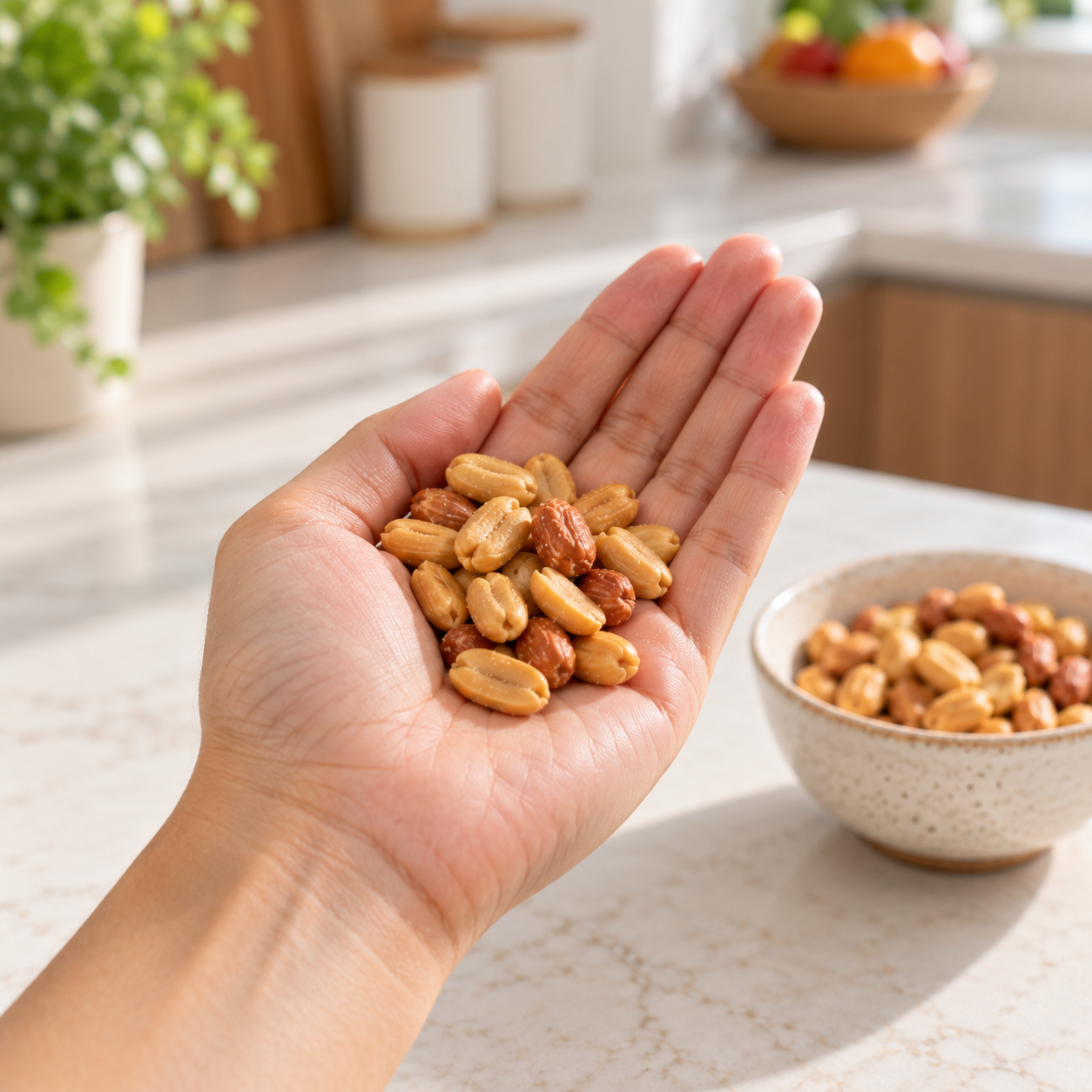
So, how many peanuts are too many?
For most adults without a peanut allergy, a small handful of plain peanuts can fit into a balanced diet.
A practical serving size is approximately 25–30g, although your ideal portion depends on your overall calorie needs and dietary requirements.
What Does a Serving Look Like?
| Portion | Approximate Calories |
|---|---|
| 15g | 85–90 kcal |
| 25g | 145–150 kcal |
| 30g | 170–180 kcal |
| 50g | 285–295 kcal |
Calories are estimates for plain dry-roasted peanuts.
There's no need to eat peanuts every single day to stay healthy.
You can also enjoy a variety of other foods, including seeds, beans, whole grains, fruits and vegetables.
Tip: If you're watching your sodium intake, choose unsalted peanuts and check the nutrition label on packaged products.
6. Boiled, Roasted or Salted Peanuts: Which Is Healthier?
In Singapore, peanuts come in many forms, from traditional boiled peanuts to roasted peanuts sold at supermarkets.
But does the way they're prepared make a difference?
Let's compare some common varieties.
| Peanut Type | What to Know |
|---|---|
| Boiled peanuts | Contain more water, so they are generally less calorie-dense per 100g than dried peanuts |
| Dry-roasted peanuts | Convenient and nutritious, especially without added salt |
| Salted peanuts | Can contain substantial sodium depending on the brand |
| Honey-roasted peanuts | Often contain added sugar |
| Fried peanuts | May contain additional oil and salt |
| Peanut butter | Provides protein and fats; check for added sugar, salt and oils |
What About Peanut Butter?
Good news for peanut butter lovers!
Peanut butter can be part of a healthy diet, especially varieties made primarily from peanuts without unnecessary added sugar or salt.
However, portion size still matters.
Two tablespoons of peanut butter can provide roughly 180–200 calories, depending on the product.
If you're shopping for peanut butter in Singapore, compare ingredient lists and nutrition labels rather than relying only on claims printed on the packaging.
What About Satay Peanut Sauce?
Satay with peanut sauce is a familiar favourite at Singapore hawker centres and gatherings.
While peanuts provide nutrients, satay sauce may also contain added sugar, salt and other ingredients.
Enjoying satay occasionally can fit into a balanced diet, but don't assume that every peanut-based dish offers the same nutritional benefits as plain peanuts.
7. Peanuts Aren't Suitable for Everyone
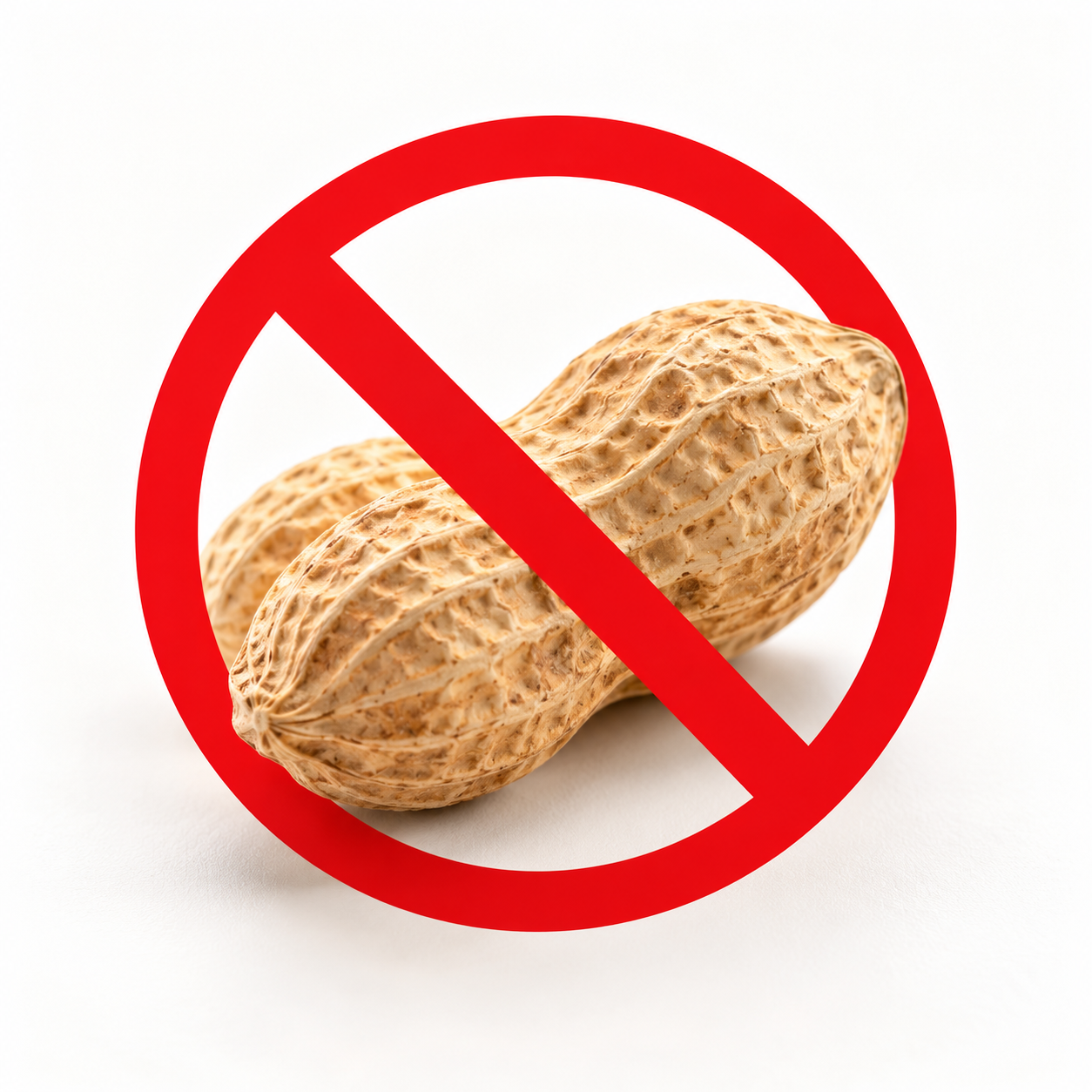
Although peanuts can be nutritious, they're not suitable for everyone.
One of the most important concerns is peanut allergy.
Peanut allergies can cause reactions ranging from mild symptoms to severe, potentially life-threatening anaphylaxis.
Symptoms may include:
-
Itching, hives or skin redness
-
Swelling of the lips, tongue or face
-
Vomiting or abdominal discomfort
-
Wheezing or difficulty breathing
-
Dizziness or fainting
If someone experiences breathing difficulties, throat swelling or other signs of a severe allergic reaction, seek emergency medical assistance immediately. In Singapore, call 995.
People with a diagnosed peanut allergy should avoid peanuts and foods containing peanut ingredients, following their healthcare professional's advice.
Be Careful With Hidden Peanut Ingredients
Peanuts may appear in foods you don't immediately associate with them.
Common examples in Singapore include:
-
Satay and peanut sauce
-
Nasi lemak accompaniments
-
Some Asian desserts
-
Peanut cookies and pastries
-
Certain sauces and dressings
-
Mixed nuts and snack products
If you're ordering food for a gathering, always check guests' dietary restrictions and allergies beforehand.
Important: Removing visible peanuts from a dish does not necessarily make it safe for someone with a peanut allergy.
Frequently Asked Questions About Peanuts
Is it healthy to eat peanuts every day?
For most people without a peanut allergy, moderate portions of plain peanuts can be part of a healthy daily diet. Choose unsalted varieties and account for their calorie content.
Do peanuts increase cholesterol?
Peanuts contain no dietary cholesterol because they're plant-based. Their unsaturated fats may support healthier blood lipid levels when they replace foods high in saturated fat.
However, eating peanuts alone won't necessarily lower your cholesterol.
Are peanuts good for people with diabetes?
Plain peanuts contain relatively little carbohydrate and provide protein, fibre and fat. They can fit into many diabetes-friendly eating plans.
However, portion sizes and the overall meal matter. People with diabetes should follow personalised dietary advice from their healthcare team.
Can peanuts help with weight loss?
Peanuts may help with satiety, but they don't directly cause weight loss. Replacing less nutritious snacks with measured portions of peanuts may support a balanced eating plan.
Are roasted peanuts healthier than boiled peanuts?
Both can be nutritious. Boiled peanuts contain more water, while roasted peanuts are more calorie-dense by weight. Added salt, sugar and oil can make a bigger difference than the cooking method alone.
Are peanuts good for your heart?
Peanuts contain unsaturated fats and other nutrients that can support a heart-healthy eating pattern. However, eating peanuts alone doesn't guarantee protection against heart disease.
Final Thoughts: Should You Eat More Peanuts?
So, are peanuts healthy?
Yes, peanuts can be a nutritious addition to your diet when eaten in moderation!
They're rich in plant-based protein, unsaturated fats, fibre and several important vitamins and minerals.
Research has also explored how peanut consumption may influence cholesterol levels, blood sugar management and long-term health.
However, peanuts aren't a miracle food.
The best approach is to enjoy them as part of a varied, balanced diet, choose minimally processed options when possible and be mindful of portion sizes.
Whether you enjoy boiled peanuts as a snack, peanut butter on toast or a little satay sauce with your favourite meal, it's all about making informed food choices!
Planning a Gathering? Let FoodLine Handle the Food!

Looking for catering for your next celebration or gathering? Whether it's a birthday party, family gathering or corporate event, FoodLine.sg makes food planning easy!
With over 500 caterers and 4,000+ menus to choose from, you can easily compare catering options, prices and reviews to find something that suits your occasion and budget.
From full buffets and mini buffets to party sets and bento meals, there's something for every gathering.
Explore FoodLine.sg and find your ideal catering menu today!
Last updated: 13 October 2026
Disclaimer: This article is intended for general informational and educational purposes only. It does not constitute medical or nutritional advice. FoodLine.sg does not provide medical advice or guarantee any specific health benefits from consuming peanuts. Individuals with food allergies, diabetes or other medical conditions should consult a qualified healthcare professional for personalised guidance.


.webp "Free PayNow QR Code Generator Singapore - Create Custom QR Codes for Invoices & Payments")


 and revisit our site to complete the process.