Food Wastage - Live more, Waste less
How much money do you think is thrown away through the food waste generated by households every year?
The answer is: $342 million.
If you were off the mark, well, you are not alone. Fewer than one in six got it right – just 16 per cent of respondents – in a Sunday times poll of 1,000 residents.
All other respondents underestimated the sum. And nearly everyone said that their household threw out only small or “reasonable” amounts of food.
As the survey shows, people do not believe they waste more food even though they are going to more buffets, catering more food than needed when hosting parties, and not taking away unfinished food when eating out."
Eating habits need to change in order to reduce food waste but Dr Quek, a former programme manager at NUS Environmental Research Institute, warned that social norms like this often take time to change. The amount of food waste generated across the board yearly climbed steadily for much of the last decade and a half, jumping by 45 per cent from 558,900 tonnes in 2007 to 810,000 tonnes in 2017.
.png/800x600.jpg)
Infographics created from Canva.com
However, it fell to 763,000 tonnes in 2018 and 744,000 in 2019. That’s the good news! More people in Singapore are taking steps to cut food wastage. More are concerned about food wastage and are taking steps to do their part. A recent study commissioned by the National Environment Agency (NEA) showed that 80 per cent of respondents are "bothered" when uneaten food is thrown away and know of the environmental impact of food waste.
It also found that more people have adopted various habits to reduce food waste, compared with a similar survey in 2015 of 1,000 people. These include taking away unfinished food when dining out and not over-catering when hosting guests. About 56 per cent said they would take away unfinished food when eating out, up from 44 per cent in 2015. And 32 per cent said they were open to buying fruits and vegetables with slight imperfections, compared with 23 per cent four years ago. Respondents were also more open to buying food close to its expiry date at a discount, with the figure shooting up from 18 per cent in 2015 to 38 per cent this year. About 3 per cent were also composting food waste at home.
How can you do your part too?
The National Environment Agency (NEA) has a few tips on how to reduce food waste:
• Avoid preparing more food than is needed.
Unsure of how much to cook? Check out FoodLine’s tingkat services @ https://www.foodline.sg/tingkat/, the plethora of merchants are experienced in cooking the right amount to satisfy your hunger!
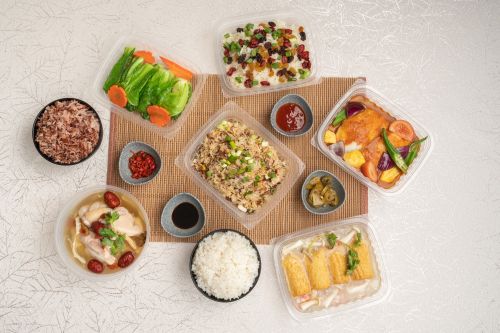
Photo from Royal Cuisine Group

.webp "Mini Buffet Catering for 10–15 Pax in Singapore: Best Options for Small Groups From $11.90/pax!")


 and revisit our site to complete the process.